
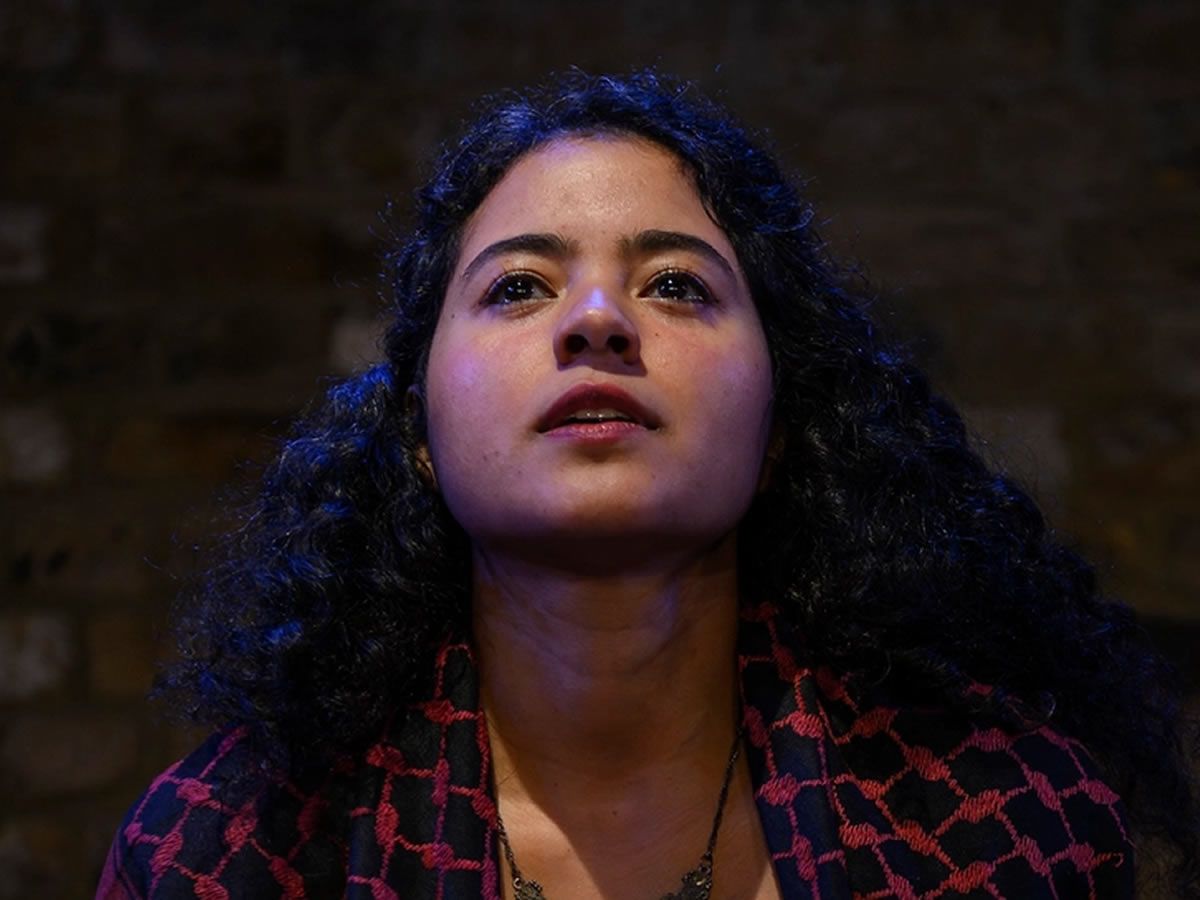
“Cutting The Tightrope” is brought to the Edinburgh International Festival from the Arcola Theatre in London.
There was a bit of a fracas from a member of the audience at the end of the performance. It came from a disgruntled theatregoer who felt shortchanged by this production. To quote from the official Festival programme he expected it to, “Delve into the ever-tightening grip of censorship on artistic freedom”. Instead, the evening revolved around the horror of genocide in Gaza, referring also to the genocide in Sudan. It mentioned not talking about climate change, discussed police oppression and how racist our country can be, as well as how Britain’s oppressive past needs constant reminder.
But the main content was on present day Gaza, and no one in the audience could fail to be moved, or respond to the relentless horror of stories told and statistics given. Mind-numbing data about the sheer number of suffering victims were flashed onto an overhead screen – my only criticism is that they flashed by too quickly to be properly read and assimilated.
The format is a series of short plays quickly written in response to a warning from the Arts Council England that companies working for them should not make overtly political or activist statements. These vignettes, poignant or pithy, sometimes with humour, always focus on global conflict or political resistance. What they don’t do Is widen out into a broader concept of censorship in the arts and society, which rightly or wrongly was what some of the audience might have hoped to see.
Maybe it was a misunderstanding of the nature of the play, but by the time we came to the post-production discussion panel the whole event had become an overly long political rally for Palestine. Agit prop for decades has been a powerful form of theatre, but in this case “Cutting The Tightrope” left us with a political “trope” overwhelmed by the immensity of its main focus, and dismissive of more “minor” censorship. This was what concerned the irate audience member: the no platforming of individuals regarded as unsafe, the banning of books that stir up disapproval, the lack of dialogue with perceived cultural enemies.
The audience member was shouted down – but not, it must be said, by the panel. Censorship? Seems to happen everywhere.
***
Church Hill Theatre